
schema
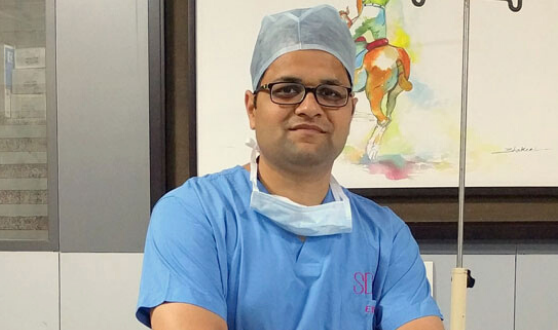
Dr. Nitesh Bansal completed his MBBS from S.N Medical College, Jodhpur in 2002 and MS in Ophthalmology from SMS Medical College, Jaipur in 2007. He is a well-known chief cataract and Lasik eye surgeon at Santokba Durlabhji Memorial Hospital, Jaipur. He did cornea observership from LV Prasad Eye Institute, Hyderabad. With a clean surgical hand, Dr. Nitesh has performed more than 6000 cataracts and Lasik laser surgeries successfully.Dr. Bansal specializes in Minimally Invasive Cataract Surgery (MICS) under topical anesthesia (without any injection), Lasik laser (for permanent removal of glasses and contact lenses which are more useful in medical and sports fitness as well as cosmetic appearances).He also does PRK(photorefractive keratectomy), ICL(Implantable Contact Lens) RLE(Refractive-Lens-Exchange).

Cataract surgery is a microscopic procedure that is performed under local/topical anesthesia. The removal of cloudy lens is carried out with phacoemulsification, which is a micro-incision technique of cataract procedure. During phacoemulsification, a probe breaks the cataract into tiny pieces and sucks them out.
For implantation of a foldable lens, a small incision measuring 2.8 mm to 3.0 mm is made and for the implantation of non-foldable lens, a 5 mm incision is carried out. Both the incisions do not require stitches to heal and heal by themselves. You can discuss with ophthalmologist about your choice of lens.
Cataracts are an inevitable part of aging. By age 65, many of us will have developed a cataract.
Once you understand the surgery it is then time to look for a surgeon. The easiest way to do this is to find someone you know who has undergone the procedure in the past. you know friends and family who have had this operation carried out. You will want to find out what they thought about the Best cataract surgeon in Jaipur and the clinic.
Cataracts are an inevitable part of aging. By age 65, many of us will have developed a cataract.
A 'cataract' is the clouding of the eye that can result in impaired vision as well as the altered appearance of the eye. This cataract occurs in the 'crystalline lens' of the eye, and this means that it blocks the entry of light into the eye and particularly around the center. This can end up leaving patients with some peripheral vision, but gradually deteriorating vision in the center of their eye.
Once you understand the surgery it is then time to look for a surgeon. The easiest way to do this is to find someone you know who has undergone the procedure in the past. you know friends and family who have had this operation carried out. You will want to find out what they thought about the Best cataract surgeon in jaipur and the clinic.
If you are looking for the best cataract surgeon in jaipur has plenty for you to choose from. There is a big demand for medical professionals. Taking the time to figure out your options will ensure that you get the best results every time.
After this operation, your vision will be much improved, but your eye will have a small wound that needs to heal. You will want to do what you can to let your eye heal, so take it easy on your eyes for a few days (or longer) following surgery. You will receive an eye patch that can be use to protect your eye.
Pink City Eye Center - The flagship company is working towards building the brand to give day care service provider. In this endeavour to bring quality healthcare to each and every citizen, we do -
Find answers to the most common questions about cataract surgery and treatment.
Common symptoms include blurred vision, difficulty seeing at night, increased sensitivity to light, glare from headlights, faded colors, double vision in one eye, and frequent changes in eyeglass prescription.
No. Cataract surgery is generally painless because local anesthesia or numbing eye drops are used. Most patients experience little to no discomfort during the procedure.
Cataract surgery is usually completed within 15 to 30 minutes. Patients are generally discharged on the same day after a short observation period.
Most patients can return to work within 2–7 days, depending on their recovery and the nature of their job. Your eye doctor will advise the right time based on your healing progress.
After cataract surgery, avoid rubbing your eyes, lifting heavy objects, swimming, and exposing your eyes to dust or dirty water for a few weeks. Follow your doctor's instructions, use prescribed eye drops, and wear protective eyewear to support proper healing.
Most patients notice improved vision within a few days. Complete healing generally takes around 4–6 weeks.
No. Once a cataract is removed, it does not return. However, some patients may develop posterior capsule opacity (PCO), which can be treated easily with a quick laser procedure.
Before surgery, your eye doctor will examine your eyes and recommend the right intraocular lens (IOL). Follow your doctor's instructions about medications, fasting (if advised), and arrange someone to take you home after the procedure.
It depends on the type of intraocular lens (IOL) used and your vision needs. Many patients have improved vision, but some may still need glasses for reading or certain activities.
Dr. Nitesh Bansal provides advanced cataract diagnosis and modern surgical techniques with personalized patient care to help achieve the best possible vision.