Wearing high spectacle numbers or struggling with daily contact lens dryness can be frustrating, especially for young adults appearing for defense or police medical examinations, sports enthusiasts, or working professionals. When planning permanent spectacles removal, consulting an experienced, high-volume LASIK surgeon in Jaipur ensures your treatment is guided by clinical safety rather than commercial convenience.
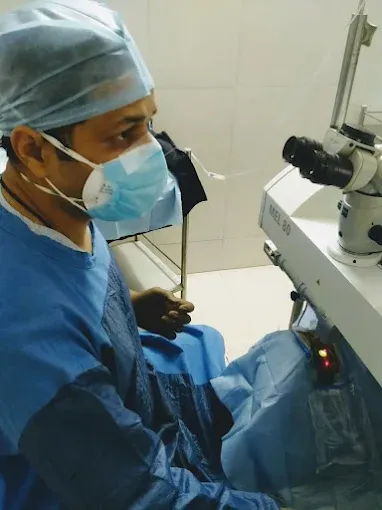
I am Dr. Nitesh Bansal (MBBS, MS Ophthalmology - SMS Medical College, Jaipur, 2007). After completing my master's degree, I pursued advanced training in Cornea & Anterior Segment surgery at the L.V. Prasad Eye Institute (LVPEI), Hyderabad. Over the past 23 years, as Senior Consultant at Santokba Durlabhji Memorial Hospital (SDMH) and Director at Pink City Eye Center, I have performed more than 7,000 successful laser and microsurgical procedures. My priority is simple: thoroughly map your cornea first, and only recommend laser treatment if it is entirely safe for your eyes.
"Patients often ask me which laser procedure is the best. The honest medical answer is that the best procedure depends entirely on your corneal thickness and shape. If someone has a thin cornea, we advise surface PRK or an ICL rather than pushing flap-based LASIK. Patient safety and long-term corneal health always come first."
In a healthy human eye, the clear front window—called the cornea—bends incoming light rays precisely onto the retina at the back of the eye, creating sharp images. However, when the shape of the cornea or eyeball is slightly irregular, refractive errors occur:
LASIK (Laser-Assisted In Situ Keratomileusis) uses a specialized cold excimer laser that resculpts the microscopic curvature of your corneal tissue. The laser delivery itself takes less than 60 seconds per eye, gently reshaping the tissue so that incoming light focuses directly onto the retina naturally without glasses or contact lenses.
Laser vision correction requires healthy, stable eye parameters. During your initial checkup, Dr. Nitesh Bansal evaluates several essential medical criteria before confirming your candidacy:
Your spectacle prescription should remain stable (fluctuations under 0.50D) for at least one full year before surgery.
Corneal pachymetry must confirm adequate corneal depth so that a safe residual bed thickness remains after laser reshaping.
A 3D corneal scan verifies smooth corneal curvature, ruling out conditions like keratoconus or excessive steepness.
Dilated retinal examination rules out peripheral thinning or tears. Laser treatment is deferred during pregnancy and nursing due to temporary hormonal fluid shifts.
Every eye is unique. Depending on your corneal thickness, power, and profession, Dr. Nitesh Bansal recommends the most suitable procedure:
| Procedure | Technology & Approach | Corneal Requirement | Best Suited For |
|---|---|---|---|
| Custom Wavefront LASIK | Micro-thin corneal flap creation followed by cold excimer laser reshaping. | Normal corneal thickness (typically above 500 microns). | Common myopia, hyperopia, and astigmatism with quick visual recovery. |
| Contoura Vision (Topography-Guided) | Maps 22,000 corneal elevation points to smooth out microscopic surface irregularities. | Adequate corneal thickness and regular surface topography. | Patients seeking sharp contrast clarity and reduced night glare. |
| Surface PRK / ASA (No-Flap Laser) | Laser reshaping done directly on the surface without creating a corneal flap. | Ideal for thinner corneas or flatter eye shapes. | Defense forces, police recruitment, athletes, and thin corneas. |
| ICL (Phakic Intraocular Lens) | Soft, foldable lens placed inside the eye in front of the natural lens, leaving cornea untouched. | Independent of corneal thickness (preserves natural cornea). | High refractive powers (-8.0D to -18.0D) or thin corneas unsuitable for laser. |
Doctor's Clinical Advice on Procedure Choice: "There is no single 'best' procedure for everyone. A young defense candidate with a borderline thin cornea is often best served by Surface PRK to avoid flap dislocation during rigorous training. Meanwhile, a software engineer with high minus power may achieve safer optical results with an ICL. We decide the exact procedure only after complete corneal biometry."
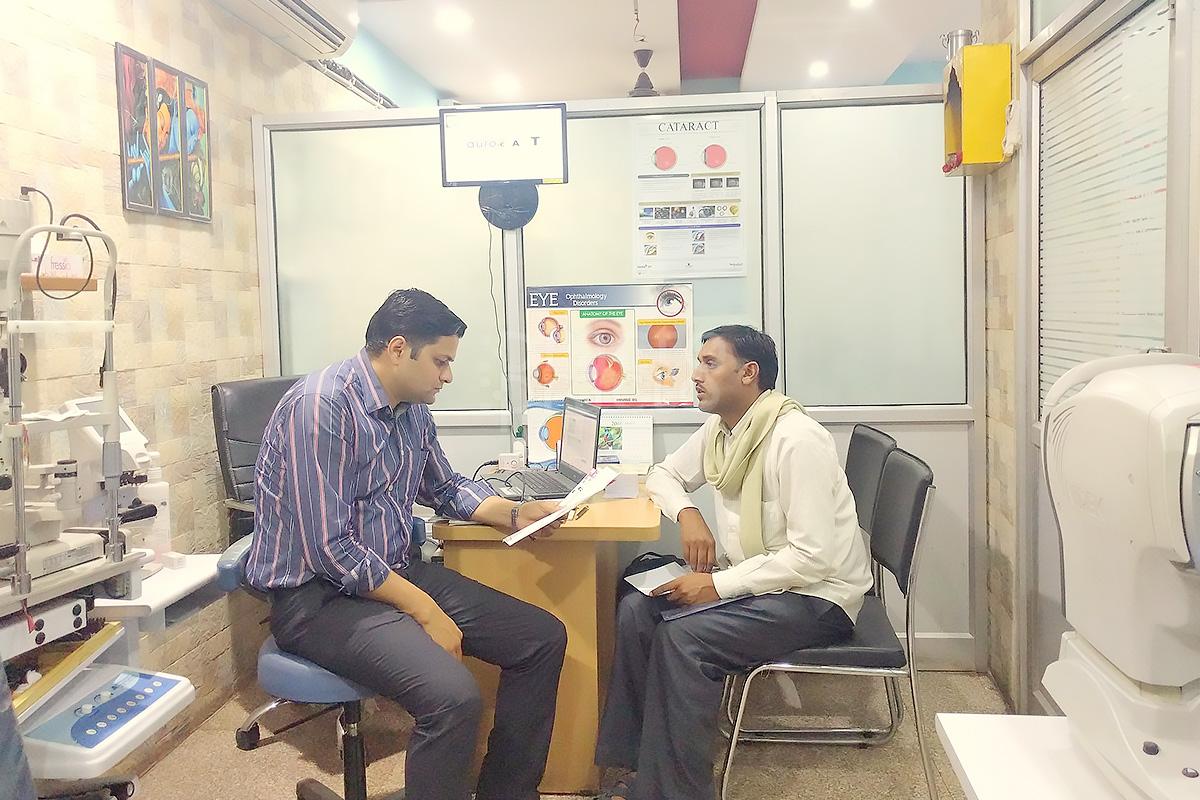
Before scheduling any laser procedure, Dr. Nitesh Bansal conducts a comprehensive pre-operative evaluation lasting about 60 minutes. This detailed screening confirms whether your corneal profile meets all clinical safety margins:
We maintain total financial transparency. An itemized estimate is provided following your diagnostic workup:
(Roughly ₹12,500 to ₹50,000+ per eye depending on customized laser technology).
What Determines the Final Package?
Understanding insurance guidelines for laser refractive surgery helps you plan your treatment with confidence:
While standard cosmetic specs removal is an elective procedure, certain corporate policies and health insurances cover refractive surgery for high refractive numbers (typically > -7.5D) or anisometropia.
How We Assist You:
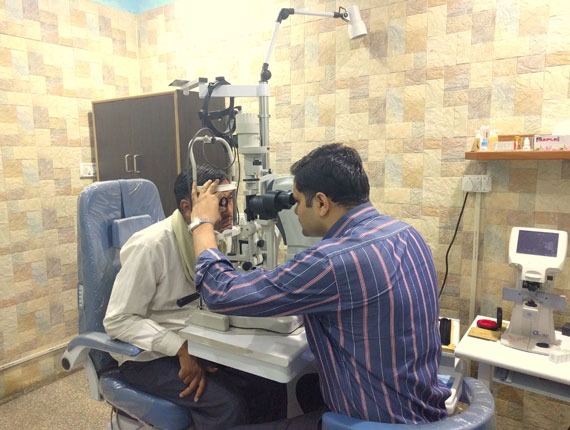
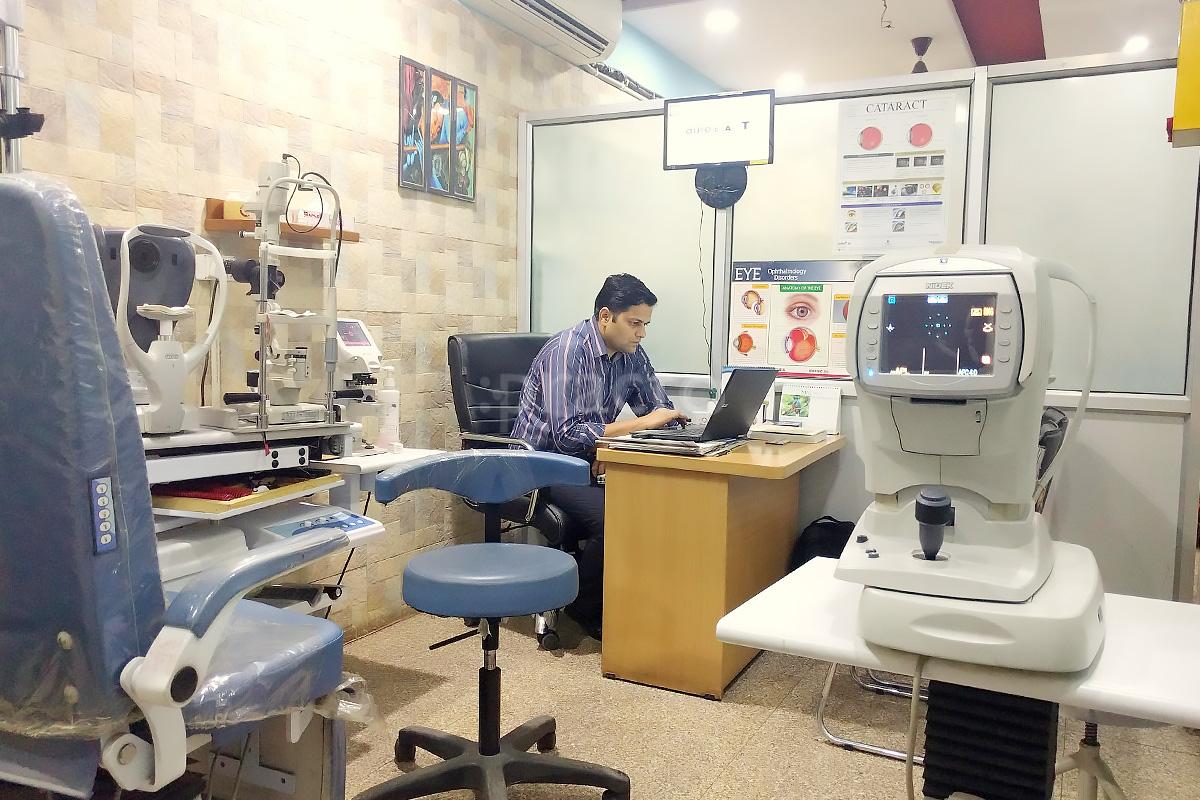
Dr. Nitesh Bansal is available for in-person refractive evaluations, corneal pachymetry, and spectacles removal counseling across two centers in Jaipur:
D-20, Eye Center, Near Vijay medicals, 80 Feet Road, Mahesh Nagar, Jaipur, Rajasthan 302015
Evening OPD: Mon – Sat: 5:30 PM – 8:00 PM | Morning: 9:00 AM – 10:00 AM (By Appt.)
Bhawani Singh Marg, Near Rambagh Circle, Jaipur, Rajasthan 302015
Morning OPD: Mon – Sat: 10:00 AM – 4:00 PM
Direct evaluation with Dr. Nitesh Bansal in Mahesh Nagar or SDMH.
Clear, honest answers to common concerns about laser vision correction asked by patients and families during our outpatient clinics.
Dr. Nitesh Bansal (MBBS, MS Ophthalmology - SMS Medical College Jaipur) is recognized among the best LASIK surgeons in Jaipur. With 23+ years of clinical experience, fellowship training from LVPEI Hyderabad, and Senior Consultant role at Santokba Durlabhji Memorial Hospital (SDMH), Dr. Bansal specializes in customized laser vision correction, Contoura Vision, PRK, and ICL.
The cost of laser specs removal in Jaipur generally ranges from ₹25,000 to ₹1,00,000+ for both eyes (roughly ₹12,500 to ₹50,000+ per eye). The exact package depends on whether you are a candidate for Standard Wavefront LASIK, Topography-Guided Contoura Vision, Surface PRK, or Phakic ICL lenses.
No. LASIK is very comfortable and performed under topical numbing eye drops. No injections around the eye or stitches are required. Patients typically feel only a mild sensation of light pressure for a few seconds during the procedure.
If corneal pachymetry shows your cornea is too thin for a flap-based procedure, Dr. Nitesh Bansal evaluates you for surface ablation (PRK / ASA) or Implantable Collamer Lenses (ICL / Phakic IOLs), which preserve natural corneal tissue safely.
The actual laser delivery takes less than 60 seconds per eye. The entire session in the procedure suite takes about 15 minutes. It is a walk-in day-care treatment, meaning you return home comfortably the same afternoon.
Yes, many young candidates undergo laser vision correction or surface PRK to meet medical fitness criteria for armed forces, police recruitment, civil aviation, and railway services. Candidate guidelines vary across services, so an early consultation with your service requirements is advised.
Most patients achieve functional, clear vision within 24 to 48 hours. Light computer and screen work can be resumed in 2 to 3 days with regular lubricating eye drops. Driving at night and intense gym workouts should typically wait for 1 to 2 weeks.
Yes, the corneal reshaping achieved with the laser is permanent. In adult eyes with a stable pre-operative number, long-term stability is excellent. Normal age-related near vision changes (presbyopia), which occur after age 40, are a natural part of aging.
LASIK is a safe and proven procedure for qualified candidates. In the initial days after surgery, mild temporary dryness, slight light sensitivity, or halos around night headlights are normal as the corneal surface heals. These symptoms subside over a few weeks and are managed effectively with prescribed lubricating eye drops. Conducting detailed corneal topography and pachymetry beforehand ensures that borderline or high-risk corneas are screened out.
A comprehensive pre-LASIK safety workup includes computerized corneal topography (corneal curvature map), ultrasonic pachymetry (corneal thickness measurement), tear film quality test, and a dilated retinal examination to ensure complete eye health.
Dr. Nitesh Bansal offers outpatient pre-LASIK screening and consultation at Pink City Eye Center (D-20, Eye Center, Near Vijay medicals, 80 Feet Road, Mahesh Nagar, Jaipur, Rajasthan 302015) during evening hours. He also consults and performs specialized procedures at Santokba Durlabhji Memorial Hospital (SDMH) during morning hours.
Medical Disclaimer: The information provided on this page is for patient education and general awareness regarding laser refractive surgery. It is not a substitute for professional medical advice, clinical diagnosis, or individualized treatment. Candidacy for LASIK, Contoura Vision, PRK, or ICL is determined solely through comprehensive in-person ophthalmic evaluation and corneal biometry by Dr. Nitesh Bansal.
Regular OPD consultations, computerized eye testing, and advanced eye surgeries are conducted at two locations in Jaipur:
Senior Consultant Eye Surgeon
Bhawani Singh Marg, near Rambagh Circle, Jaipur
Monday to Saturday: 10:00 AM – 4:00 PM
Sutureless MICS Cataract, LASIK, Contoura Vision & Glaucoma surgeries
Consultation & Computerized Testing
D-20, Eye Center, Near Vijay medicals, 80 Feet Road, Mahesh Nagar, Jaipur, Rajasthan 302015
Mon to Sat: 9:00–10:00 AM (Appt) | 5:30–8:00 PM (Regular)
Sunday: 10:30 AM – 12:00 PM (Only by Appointment)
Computerized eye testing, spectacle removal consults & routine checkups